Expert insights, market trends, and professional advice from qualified RICS chartered surveyors. Stay informed about property surveying, building surveys, and the UK property market.
Latest Articles & Insights
Professional guidance from experienced RICS surveyors to help you make informed property decisions
Comprehensive overview of Level 3 building surveys, when you need them, what they include, and how to interpret the results for informed property decisions.
Current market insights from RICS surveyors including regional variations, price trends, and emerging issues affecting property valuations across the UK.
Unique challenges when surveying Victorian, Edwardian, and Georgian properties including traditional construction methods and conservation requirements.
How modern surveys assess energy performance, insulation, heating systems, and sustainability features to help buyers make environmentally conscious decisions.
November 25, 2024
8 min read
The Complete Guide to Building Surveys: Everything You Need to Know
Surveying GuideDecember 15, 20248 min read
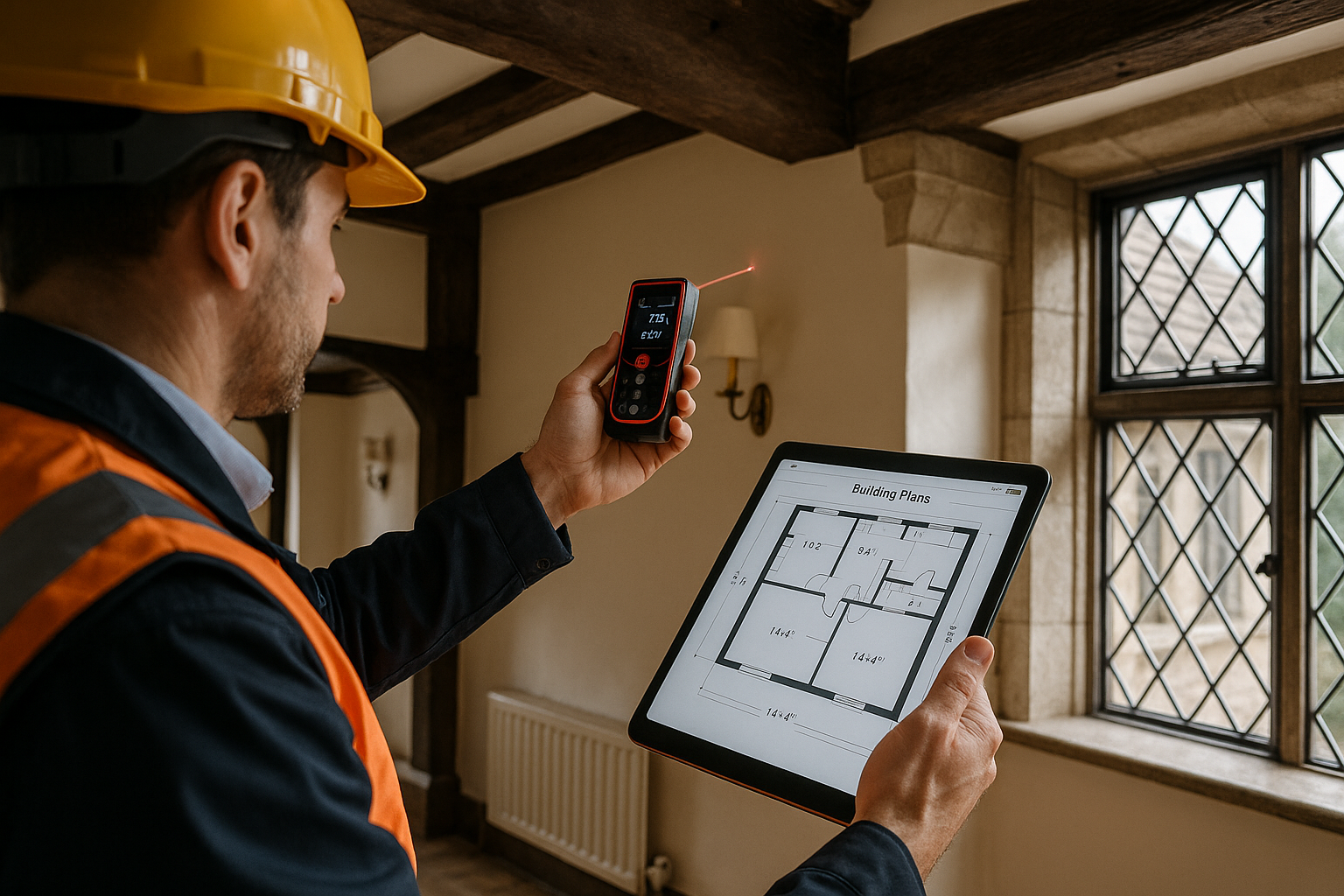
When buying a property, especially an older or unusual building, a Level 3 building survey provides the most comprehensive assessment available. Our RICS Surveyor Near Me experts explain everything you need to know about building surveys to make informed property decisions.
What is a Building Survey?
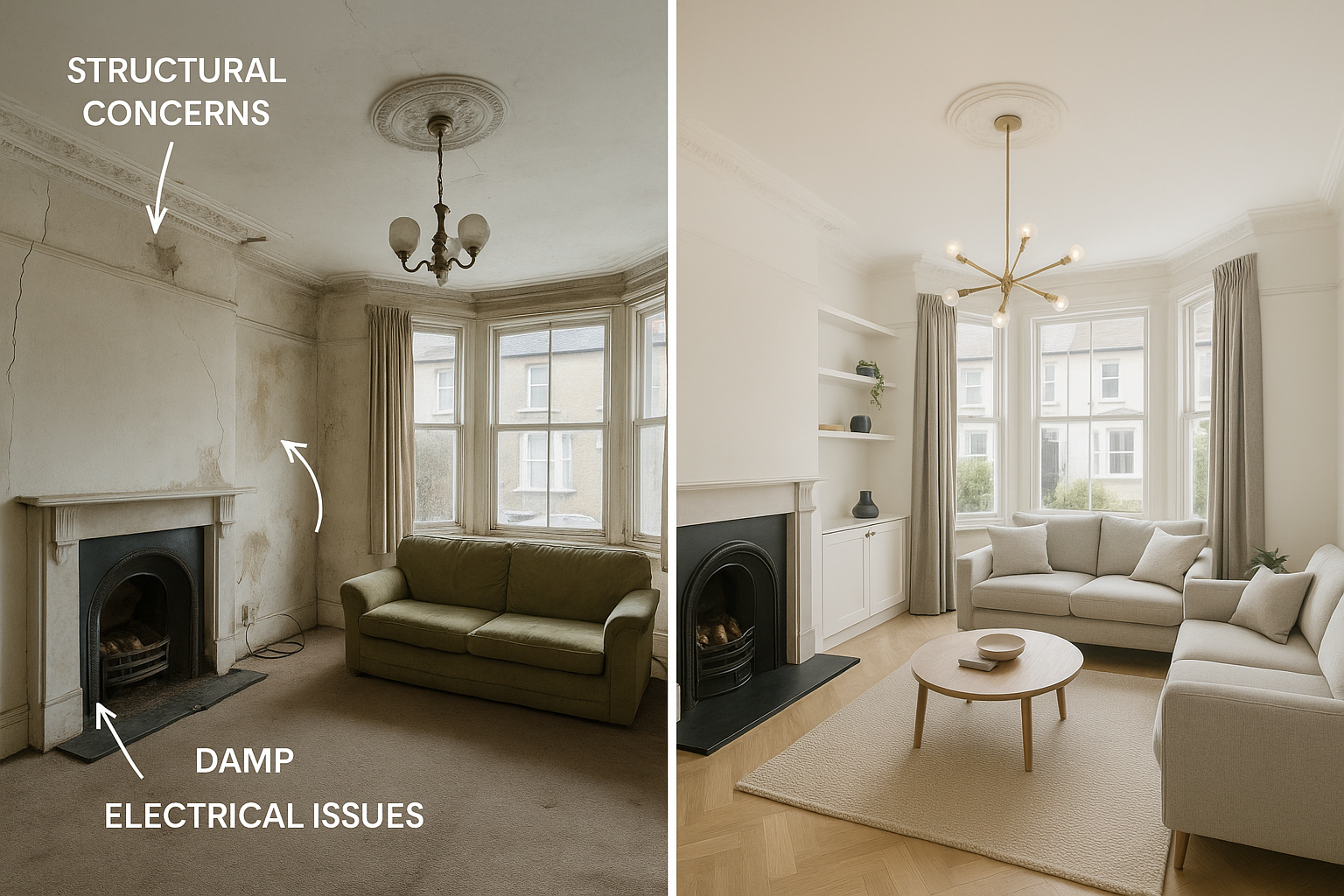
A building survey, also known as a Level 3 survey, is the most detailed type of property survey available. Unlike Level 2 homebuyer surveys that use traffic light ratings, building surveys provide comprehensive analysis of all accessible parts of the property, including detailed descriptions of defects, their likely causes, and guidance on repairs and maintenance.
When Do You Need a Building Survey?
Building surveys are recommended for:
Properties built before 1900 or of unusual construction
Buildings that have been significantly altered or extended
Properties in poor condition or requiring renovation
Listed buildings or properties in conservation areas
Commercial or mixed-use properties
Any property where you plan major alterations
What Does a Building Survey Include?
Our chartered building surveyors provide comprehensive assessment including:
Structural Assessment
Foundation condition and stability
Wall construction and structural integrity
Roof structure and covering assessment
Floor construction and condition
Building Services
Electrical installation overview
Plumbing and heating systems
Drainage and water supply
Insulation and energy efficiency
Understanding Survey Results
Building survey reports provide detailed analysis rather than simple ratings. Our RICS surveyors explain defects clearly, categorize their urgency, and provide guidance on repair priorities and costs. This comprehensive insight helps you negotiate property prices and plan future maintenance effectively.
Building Survey Costs and Timeline
Building survey costs typically range from £800-£1,500 depending on property size and complexity. The inspection usually takes 3-6 hours, and you'll receive your detailed report within 5 working days. This investment provides essential peace of mind and can save thousands in unexpected repair costs.
Expert Tip
"A building survey isn't just about identifying problems – it's about understanding your property's potential. We often find that apparent 'issues' are actually character features that add value when properly maintained."
- James Mitchell, Senior RICS Surveyor
First-Time Buyer's Guide to Homebuyer Surveys
Buyer's GuideDecember 12, 20246 min read
As a first-time buyer, navigating property surveys can feel overwhelming. Our guide explains everything about Level 2 homebuyer surveys, helping you understand what to expect and how to use survey results to make confident property decisions.
Why Do You Need a Homebuyer Survey?
A homebuyer survey protects your investment by identifying potential problems before you commit to purchase. While mortgage lenders require basic valuations, these don't assess property condition. A Level 2 survey provides essential insight into defects, legal issues, and maintenance requirements that could affect your decision or help in price negotiations.
What's Included in a Homebuyer Survey?
What's Included
Property condition assessment
Market valuation
Insurance rebuild costs
Urgent defect identification
Legal and safety issues
Maintenance advice
What's Not Included
Detailed structural analysis
Hidden defect investigation
Electrical/gas safety testing
Specific repair cost estimates
Planning permission advice
Environmental assessments
Understanding the Traffic Light System
Homebuyer surveys use a simple traffic light system:
Green (Condition 1)
No repair currently needed. Normal maintenance required.
Amber (Condition 2)
Defects requiring future attention, but estimates needed for timing and cost.
Red (Condition 3)
Urgent repairs or safety risks requiring immediate professional attention.
Using Survey Results in Negotiations
Survey findings provide valuable negotiating power. Significant defects (Condition 2 or 3) may justify price reductions or require the seller to complete repairs before exchange. Your surveyor can provide guidance on typical repair costs to support negotiations, though detailed estimates require specialist contractors.
First-Time Buyer Tip
"Don't be deterred by minor defects in survey reports. Most properties have some issues – it's about understanding their significance. Use the survey to plan future maintenance and ensure you're paying a fair price for the property's condition."
UK Property Market Trends 2024: What Surveyors Are Seeing
Market AnalysisDecember 10, 202410 min read
From the ground level of property inspections, RICS surveyors have unique insights into market trends. Here's what our network of chartered surveyors are observing across different UK regions in 2024.
Regional Market Variations
London & South East
Despite economic pressures, prime London locations continue showing resilience. However, surveyors report increased buyer scrutiny of property condition, with detailed building surveys becoming more common even for newer properties. Energy efficiency is increasingly important for valuation.
Northern England
Manchester and Leeds markets show strong activity with realistic pricing. Surveyors note increased demand for period properties, but buyers are more aware of maintenance costs. Industrial heritage conversions remain popular but require specialist survey expertise.
Emerging Survey Trends
Technology Integration
Modern surveys increasingly incorporate thermal imaging, moisture detection, and digital reporting. These technologies provide more accurate assessments and help identify hidden defects that traditional methods might miss.
Sustainability Focus
Buyers increasingly request assessments of energy efficiency, insulation performance, and potential for renewable energy installations. This trend affects both residential and commercial valuations significantly.
Market Predictions for 2025
Based on current survey activity and client behavior, we anticipate continued emphasis on property condition assessment. Buyers are becoming more sophisticated, requesting detailed surveys even for newer properties. Energy efficiency will become a key valuation factor as environmental regulations tighten.
"The market is evolving toward more informed purchasing decisions. Clients now understand that a thorough survey isn't just about identifying problems – it's about understanding long-term value and maintenance requirements."
Top 10 Property Defects Found in UK Building Surveys
Defect AnalysisDecember 8, 202412 min read
From thousands of building surveys across the UK, our RICS chartered surveyors have identified the most common property defects affecting homebuyers. Understanding these issues helps you spot warning signs and plan for potential repair costs.
1. Damp and Water Penetration
Occurrence: Found in 65% of surveys conducted on properties over 30 years old.
Rising damp, penetrating damp, and condensation issues remain the most common problems identified in UK property surveys. Signs include peeling paint, musty odors, and moisture stains on walls. Treatment costs range from £500 for minor condensation issues to £5,000+ for comprehensive damp-proofing systems.
2. Roof and Guttering Issues
Occurrence: Present in 45% of surveys on properties with original roofing.
Missing tiles, blocked gutters, and deteriorating flashing cause significant water damage if left untreated. Our surveyors commonly find roof issues that require immediate attention, with repair costs ranging from £300 for minor gutter repairs to £15,000+ for complete roof replacement.
Warning Signs to Watch For
Water stains on ceilings or walls
Peeling or bubbling paint
Musty odors in rooms
Visible mold growth
Damaged or missing roof tiles
Overflowing or sagging gutters
3. Electrical Installation Issues
Outdated electrical systems pose safety risks and fail to meet modern demands. Properties with original 1960s-1980s wiring often require complete rewiring. Costs typically range from £3,000-£8,000 for a full house rewiring, but this essential safety upgrade protects against fire risks and insurance invalidation.
4. Subsidence and Structural Movement
While less common, subsidence affects approximately 8% of surveyed properties, particularly in areas with clay soil. Signs include diagonal cracks wider than 3mm, doors and windows sticking, or visible external wall movement. Professional structural investigation costs £1,000-£3,000, with remedial work potentially reaching £20,000+.
"Most property defects are manageable when identified early through professional surveys. The key is understanding their significance and planning appropriate remedial work within realistic budgets."
Understanding Property Valuations: RICS Red Book Standards
ValuationsDecember 5, 20247 min read
Professional property valuations follow strict RICS Red Book standards to ensure accuracy and consistency. Understanding how valuations work helps you appreciate their importance in property transactions and investment decisions.
RICS Red Book Standards
The RICS Red Book provides mandatory standards for RICS members undertaking asset valuations. These standards ensure consistency, transparency, and professionalism in valuation practice across the UK. All our valuations comply with these rigorous requirements, giving you confidence in accuracy and acceptability to lenders and courts.
Valuation Methods Explained
Comparable Method
Most common for residential properties. Analyzes recent sales of similar properties in the same area, adjusting for differences in size, condition, and features.
Investment Method
Used for rental properties. Calculates value based on rental income potential and investment yields expected in the current market.
Cost Method
Applied to specialized properties. Based on land value plus construction costs, minus depreciation for age and obsolescence.
Residual Method
For development properties. Calculates value based on completed development value minus construction costs and profit margins.
Factors Affecting Property Values
Our RICS valuers consider multiple factors when assessing property values:
Location and accessibility - Transport links, local amenities, school catchment areas
Market conditions - Supply and demand dynamics, economic factors
Size and layout - Floor area, room configuration, garden space
Planning potential - Extension possibilities, permitted development rights
Energy efficiency - EPC rating, heating systems, insulation quality
Professional Insight
"Valuations aren't just about comparable sales data. We analyze market trends, planning policies, and local development to provide accurate assessments that reflect both current value and future potential."
- Sarah Thompson, Chartered Valuation Surveyor
Party Wall Act 1996: A Homeowner's Complete Guide
Legal GuideDecember 3, 20249 min read
The Party Wall Act 1996 provides a framework for preventing and resolving disputes about party walls, boundary walls, and excavations near neighboring buildings. Understanding your rights and obligations protects both parties during construction work.
What Work Requires Party Wall Notices?
Party Wall Work
Building new walls on the boundary line
Work to existing party walls (cutting, demolition, underpinning)
Cutting into party walls for beam insertion
Increasing height of party walls
Demolition and rebuilding of party walls
Excavation Work
Excavating within 3 meters of neighboring buildings (deeper than neighbor's foundations)
Excavating within 6 meters (if going below neighbor's foundation level)
New basement construction affecting neighbors
Foundation work near boundary walls
The Party Wall Process
1
Serve Notice
Give formal notice to adjoining owners 2 months before work starts (1 month for Line of Junction notices).
2
Neighbor Response
Neighbors have 14 days to consent or dissent. No response counts as dissent.
3
Appoint Surveyors
If dissent occurs, both parties appoint surveyors or agree on a single agreed surveyor.
4
Party Wall Award
Surveyors prepare an award detailing how work proceeds, including schedules of condition and timing.
Costs and Responsibilities
The building owner initiating work typically pays all party wall surveyor fees, including the neighbor's surveyor costs. Fees range from £1,500-£5,000 depending on project complexity. While this may seem expensive, proper party wall procedures prevent costly disputes and legal action.
"Party wall procedures protect both building owners and neighbors. Early engagement with qualified party wall surveyors prevents disputes and ensures smooth project progression with proper legal protection."
Surveying Period Properties: Special Considerations & Common Issues
HeritageDecember 1, 202411 min read
Period properties offer character and charm but require specialized surveying expertise. Victorian, Edwardian, and Georgian buildings present unique challenges that standard surveys may not adequately address. Understanding these issues helps preserve architectural heritage while ensuring modern habitability.
Victorian Properties (1837-1901)
Victorian houses showcase excellent craftsmanship but often suffer from age-related deterioration. Common issues include solid wall construction without damp-proof courses, original slate roofs requiring maintenance, and single-glazed sash windows needing restoration. Our surveyors understand Victorian construction techniques and can distinguish between character features and genuine defects requiring attention.
Common Victorian Issues
Rising damp in solid walls
Deteriorating pointing and brickwork
Original slate roof maintenance
Sash window restoration needs
Cast iron guttering corrosion
Suspended timber floor issues
Chimney structural problems
Original electrical/plumbing systems
Edwardian Properties (1901-1910)
Edwardian homes represent a transition period incorporating some Victorian craftsmanship with early 20th-century improvements. These properties often feature bay windows, decorative brickwork, and larger rooms but may have experimental construction methods that require expert assessment. Our surveyors evaluate both historical integrity and modern performance requirements.
Georgian Properties (1714-1837)
Georgian architecture emphasizes proportion, symmetry, and classical details. Many Georgian properties are listed buildings requiring specialized conservation expertise. Survey considerations include lime mortar pointing, original windows and shutters, and structural modifications that may affect architectural integrity. Planning restrictions often apply to alterations and repairs.
Conservation and Listed Building Considerations
Listed Building Consent
Listed buildings require consent for most alterations, repairs, and improvements. Our surveyors understand conservation requirements and can advise on appropriate materials and methods that satisfy both structural needs and heritage protection obligations.
Traditional Materials and Methods
Period properties often require traditional materials like lime mortar, horsehair plaster, and natural stone. Modern cement-based repairs can cause damage to historic fabric. Our surveys identify appropriate restoration techniques that preserve authenticity while ensuring structural integrity.
Modern Adaptation Challenges
Balancing period character with modern comfort requires careful planning. Installing central heating, insulation, and modern utilities while preserving historic features needs expert guidance. Our surveys assess feasibility of improvements and identify potential conflicts between conservation requirements and contemporary living standards.
Conservation Expertise
"Period properties reward owners who understand their unique requirements. Proper survey assessment and conservation-aware maintenance preserve both heritage value and long-term structural integrity."
- David Roberts, Heritage Specialist Surveyor
Commercial Lease Dilapidations: Landlord & Tenant Rights
CommercialNovember 28, 202414 min read
Commercial lease dilapidations represent one of the most contentious areas in commercial property management. Understanding your obligations as landlord or tenant, and the role of professional surveyors in resolving disputes, protects your interests and minimizes costs at lease end.
Understanding Dilapidations Claims
Dilapidations claims arise when tenants fail to comply with lease repair obligations or leave premises in poor condition at lease end. Claims typically cover repair costs, reinstatement works, and lost rental during remedial work periods. Professional assessment by qualified surveyors ensures fair evaluation of actual damage and reasonable repair costs.
Tenant Repair Obligations
Full Repairing Lease (FRI)
Tenant responsible for all repairs, maintenance, and compliance with statutory requirements.
Structural repairs and maintenance
External and internal decorations
Mechanical and electrical systems
Health and safety compliance
Internal Repairing Only
Landlord retains responsibility for structure and exterior, tenant handles internal areas.
Internal decorations and fixtures
Floor coverings and partitions
Internal lighting and power
Tenant's alterations and improvements
The Dilapidations Process
1
Schedule of Dilapidations
Landlord's surveyor prepares detailed schedule identifying breaches of lease obligations and required remedial works.
2
Tenant's Response
Tenant's surveyor reviews claims, challenges inappropriate items, and prepares counter-schedule or Scott Schedule response.
3
Negotiation & Settlement
Surveyors negotiate reasonable settlement considering diminution in value, supersession, and proportionate costs.
Key Legal Principles
Diminution in Reversion
Landlord's claim limited to actual loss in property value, not necessarily full repair costs. If proposed alterations would improve the property, dilapidations claims may be reduced or eliminated.
Supersession
If landlord plans alterations that would supersede claimed repairs, tenant may escape liability for those items. Professional assessment determines which works would be genuinely superseded.
Section 18 Limitation
Landlord & Tenant Act 1927 limits claims to actual diminution in property value. This statutory protection often significantly reduces dilapidations claims from initial demands.
Professional Surveyor's Role
Qualified surveyors provide independent assessment of property condition, appropriate repair specifications, and reasonable cost estimates. We help landlords prepare justified claims and assist tenants in mounting effective defenses. Early professional involvement often prevents costly litigation and achieves fair settlements for both parties.
"Dilapidations disputes are best resolved through professional negotiation based on accurate assessment and fair application of legal principles. Early surveyor involvement saves time, costs, and relationships."
Energy Efficiency & Sustainability in Property Surveys
SustainabilityNovember 25, 20248 min read
Energy efficiency has become a critical factor in property valuation and buyer decisions. Modern surveys increasingly assess environmental performance, helping buyers understand running costs, regulatory compliance, and potential improvement opportunities for sustainable living.
Energy Performance Certificates (EPC)
All properties require valid EPCs showing energy efficiency ratings from A (most efficient) to G (least efficient). Our surveys analyze EPC findings and identify practical improvements that enhance both efficiency and property value. We assess insulation quality, heating systems, glazing performance, and renewable energy potential to provide comprehensive sustainability guidance.
Key Energy Efficiency Factors
Insulation Assessment
Roof insulation depth and condition
Wall insulation (cavity or solid wall)
Floor insulation in suspended timber floors
Thermal bridging identification
Heating System Efficiency
Boiler age, type, and efficiency rating
Heating controls and thermostat systems
Radiator condition and sizing
Heat pump suitability assessment
Glazing Performance
Double/triple glazing installation
Window frame materials and condition
Secondary glazing opportunities
Air tightness and draught sealing
Renewable Energy
Solar panel installation potential
Ground/air source heat pump viability
Roof orientation and shading analysis
Planning permission requirements
Sustainability Investment Priorities
Our surveys prioritize energy improvements by cost-effectiveness and impact:
Government targets for net-zero emissions by 2050 will drive increasing energy efficiency requirements. Properties with poor EPC ratings may face rental restrictions, reduced market appeal, and mandatory improvement obligations. Our surveys help buyers understand long-term sustainability compliance and investment requirements.
Sustainability Focus
"Energy efficiency isn't just about environmental responsibility – it's about future-proofing property investments. Sustainable properties offer lower running costs, better comfort, and increasing market premium."
- James Mitchell, Sustainability Specialist
Stay Updated with Property Market Insights
Get expert surveying advice and market updates delivered to your inbox
Need Professional Survey Advice?
Get expert guidance from qualified RICS chartered surveyors for all your property surveying needs.